
Article: What is knit strength - and why is it important?
What is knit strength - and why is it important?
When you delve into knitting projects - whether it's a cozy sweater, a pair of warm socks or a nice hat - you quickly come across the term knitting fastness. But what does it really mean and why are all knitters talking about it?
What is knit strength?
Knit strength (also called gauge) tells you how many stitches and rows you knit per 10 cm. It is therefore a measure of how tightly or loosely you knit. In a recipe you will often see something like:
Knitting gauge: 20 stitches x 28 needles = 10 x 10 cm
This means that when you knit a sample with the recommended yarn and needle size, your knitted field should measure 10 cm in width when you have 20 stitches and 10 cm in height when you have 28 needles.
Why is knitting tenacity so important?
Many are tempted to skip the knitting test - but it can be expensive later! The knitting strength is the key to your finished project getting the right size. A single stitch too few or too many can make a big difference in the final measurements of your knit. For example if you need 21 stitches per 10 cm on a sweater that must have an overall width of 109 cm, but you have 20 stitches per 10 cm, you will instead get a measurement of 115 cm - a full 6 cm too much!
That is, if you knit looser than specified:
-
If your project is bigger than planned
If you knit tighter:
-
Will it be less
A changed knitting strength can mean that a sweater will be too big, or that a pair of mittens will end up being too small. Therefore, a small knitting test can save you both time and frustration.
How do you make a knitting test?
If we pretend that you have to knit a sweater with 21 stitches per 10 cm on needle 4 mm, do the following:
-
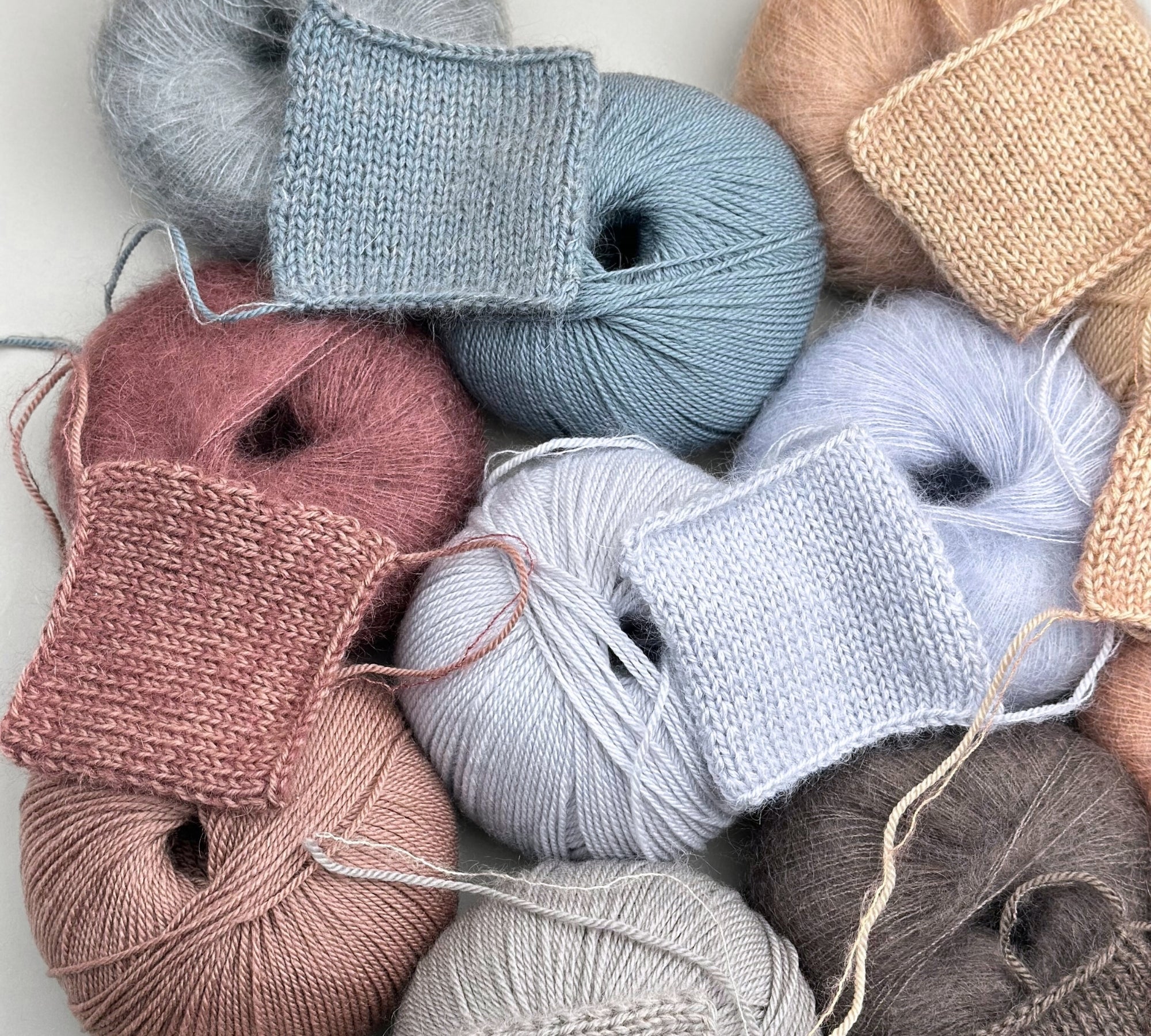
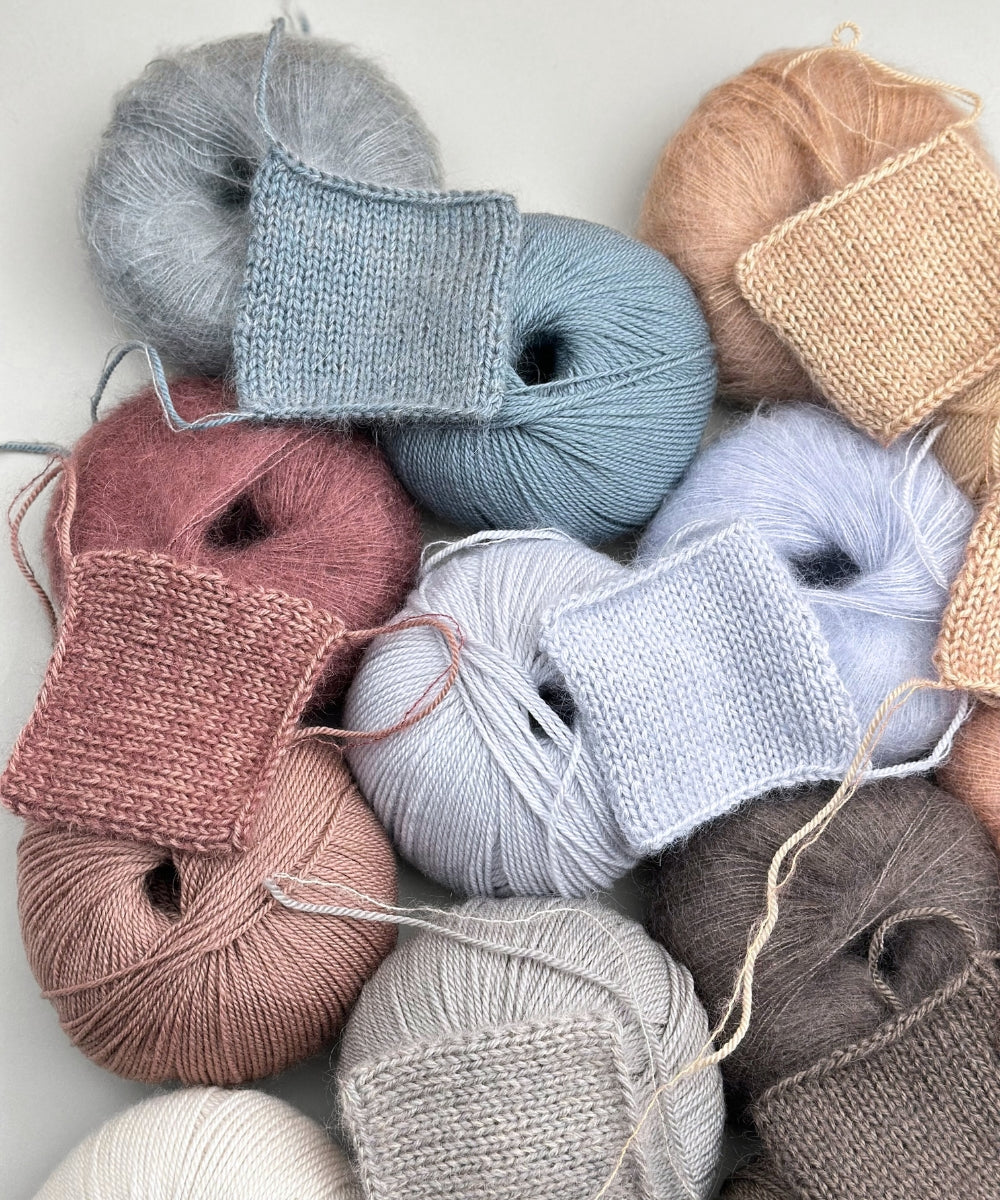
Hit approx. Cast on 27 stitches (slightly more than the recipe measurements, so you can measure in the middle of the sample).
-
Knit in that pattern, the pattern uses or as indicated in info on knitting strength.
-
Wash the sample - knit strength is always specified as a starting point after washing, as many yarn types will change after this.
-
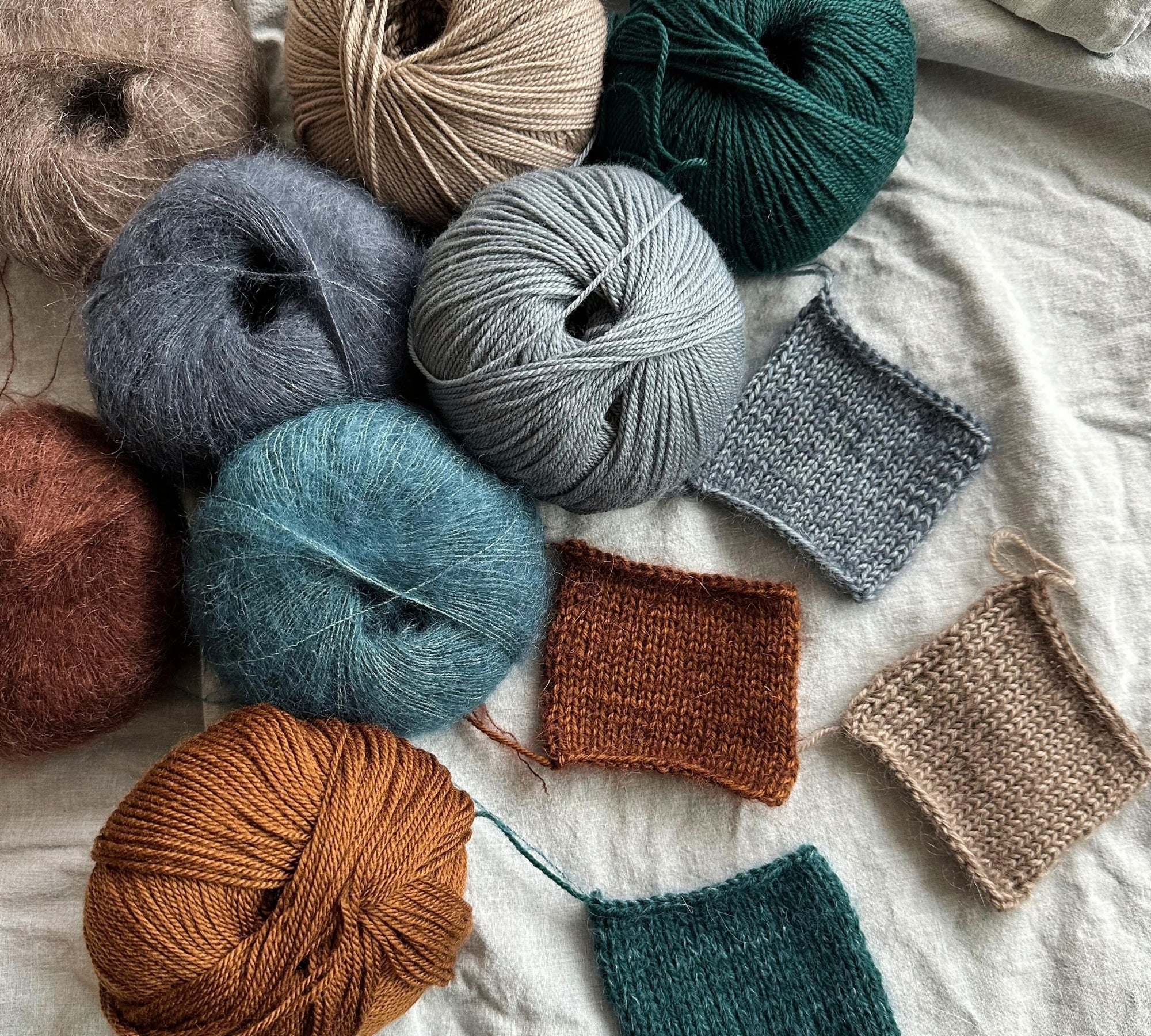
Lay the sample flat and let it dry - if it is knitted in a pattern, remember to block it.
-
Measure 10 cm transversely and vertically. Count stitches and needles within the 10 cm.
If your numbers don't match, you can adjust:
-
Too many stitches: switch to larger sticks
-
Too few stitches: change to smaller sticks
It is completely normal to have to try a little.
Knitting strength and yarn choice
Even when two yarns look the same, their knitting strength can be different because the fibers, the spinning and the length of the run affect the result. It is therefore a good idea to always check the yarn's label or product description. At butiskmuksak.dk you can see recommended needle size and knitting strength under each yarn, which will help you get started.
In short:
-
Knitting strength is the number of stitches and needles per 10 cm.
-
It ensures that your knitting project gets the correct size.
-
A knitting test is your best friend – it saves time and annoyance.