

Guide: How to calculate yarn consumption when using a yarn alternative
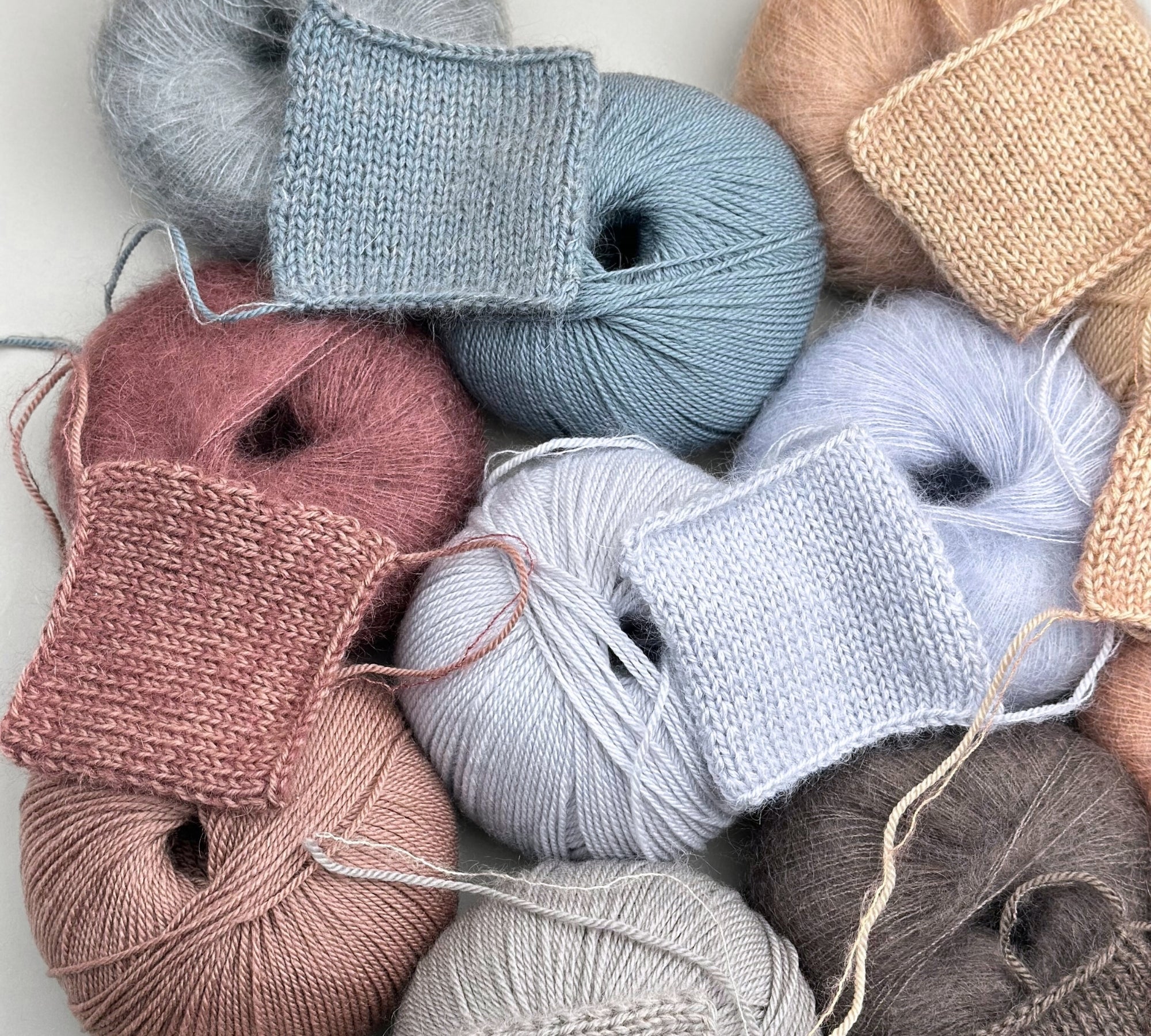
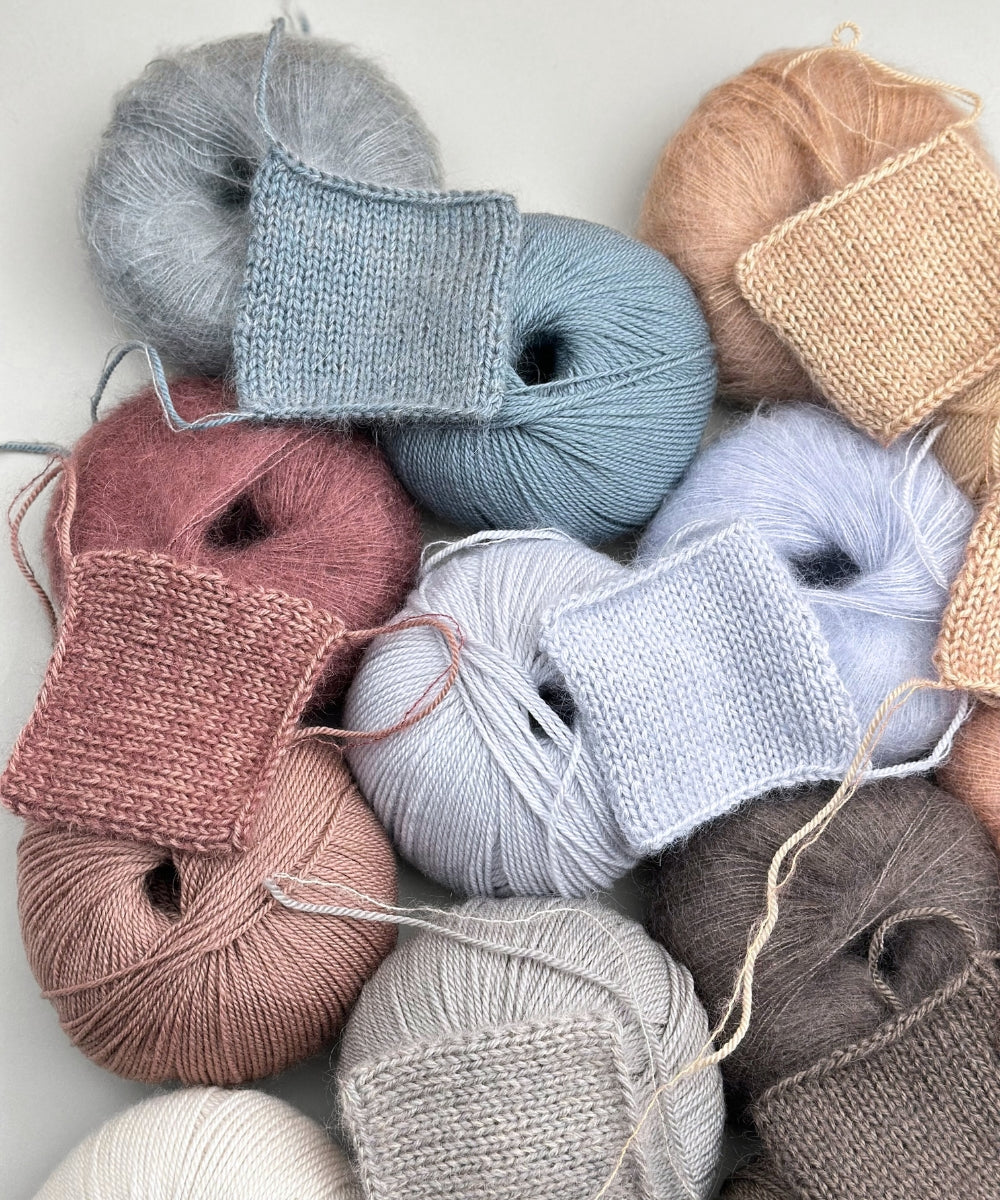
When you knit according to a pattern, the designer almost always recommends a specific yarn. But what do you do if you want to use a different yarn – perhaps one you already have in your stash, or a yarn that has a different fiber, color or price?
In this guide you will learn both how to find good alternatives and how to calculate the consumption if the mileage is different.
Find the right yarn alternative
When choosing a yarn other than what the recipe suggests, there are three main considerations you should always keep in mind: knitting fastness, fiber content and number of threads. Here is a simple overview of what to look for.
Consideration 1: Knitting firmness, knitting firmness, knitting firmness
Knitting strength is alpha omega when you need to find a yarn alternative. If the knitting pattern e.g. indicates a knitting strength of 21 stitches per 10 cm, you must find a yarn that can provide the same strength. Knitting strength is typically always indicated on the banner and online where you buy the yarn.
The one specified knitting strength is thus more important than the running length of the yarn. Run length can give an indication of whether the yarn has the same thickness, but it is not always accurate. Yarn with the same thickness and knitting strength can indeed have different run lengths, depending on which fibers it is made of and how it is spun.
Two different yarns are used in the recipe, e.g. a thread of Merino wool together with Silk Mohair? Then you just have to look at the individual specified knitting strengths on the original yarns and see if it matches the new alternatives.
Consideration 2: Different fibers give different expressions
It is not enough to think about the knitting strength - you also have to keep in mind how different types of yarn behave and give different expressions, both in appearance and how it falls.
For example long-haired and worsted yarn types, such as mohair will often give a lighter and airier look, whereas cotton or merino yarn will give a more "smooth" look and fall heavier.
So if you dream of a certain expression, it is worth considering which fibers will give exactly the result you want, both in terms of fit and appearance.
Consideration 3: What if I want to knit in two threads instead of one thread - or vice versa?
It is no problem to change the number of threads - as long as it ultimately gives the correct knitting strength.
Example: if a pattern is originally knitted in two threads, e.g. a thread of wool + a thread of mohair, which together give a knitting strength of 18 stitches per 10 cm, you just need to find an alternative yarn that gives this knitting strength when knitted alone in one thread.
Calculate consumption for yarn alternatives
When choosing a yarn other than the original yarn, make sure you have the right amount. Here it is important to look at the running lengths.
The running length tells how many meters there are per 50 g or 100 g yarn.
Two yarns can have the same knitting strength, but still a completely different run length – and therefore you may need to buy more or fewer skeins.
We start from the fact that the recipe says, for example:
- Original Yarn: 200 m / 50 g
- Consumption in the recipe: 250 g (equivalent to 5 keys)
You will instead use a yarn with:
- Alternative yarn: 150 m / 50 g
Step 1: Find the total meter quantity in the recipe
250 g of the original yarn with 200 m/50 g =
→ (250 g / 50 g) × 200 m
→ 1,000 meters of yarn
Step 2: Divide the amount of meters by the running length of your alternative
Your yarn is 150 m/50 g:
1,000 m / 150 m = 6.67 keys → round up to 7 keys.
You will therefore need approx. 350 g of the alternative yarn.